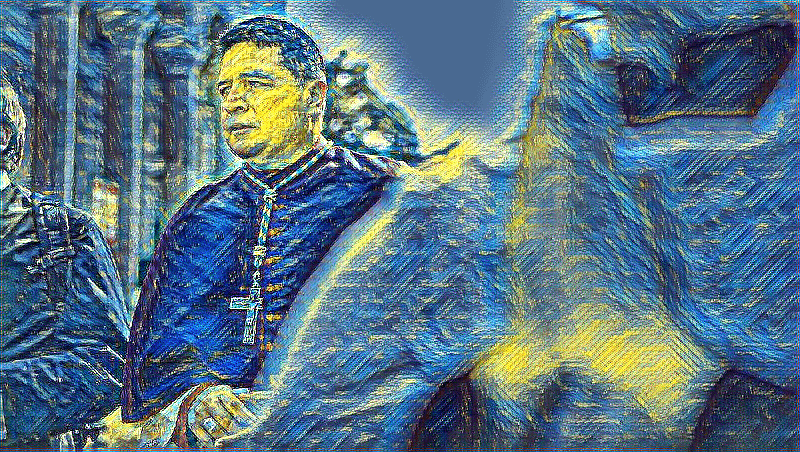
Bishop-designate Evelio Menjívar Ayala, who entered the U.S. undocumented in 1990, is set to lead the Diocese of Wheeling-Charleston in West Virginia, a state with deep political ties to Donald Trump.
Background and Appointment Context
Bishop Menjívar Ayala is the appointed bishop for the Diocese of Wheeling-Charleston, which encompasses all of West Virginia. His appointment has drawn significant attention due to the state's conservative political landscape and recent public discussions involving the Catholic Church and political figures.
- West Virginia's Political Climate: The state was a key electoral win for Donald Trump in three consecutive presidential elections.
- Timing: His appointment follows public statements from Church leaders regarding the treatment of immigrants in the United States.
Menjívar's Stance on Immigration and Politics
Speaking from the Pastoral Center in Hyattsville, Maryland, Menjívar addressed the speculation surrounding his appointment, emphasizing his commitment to humanitarian causes.
- On Political Messaging: He dismissed the notion that his appointment was a direct message to the U.S. President, stating, “I don’t think the pope is sending a message to Trump.” He asserted that the message is about the readiness of immigrants to work wherever they are sent.
- Advocacy: Menjívar affirmed that he will continue to advocate for the humane treatment of immigrants, noting that this advocacy is deeply personal due to his own journey.
- Church Role: While cautioning against partisan campaigning, he stated that clergy have a duty to guide their faithful and bring light to societal problems, asserting, “You cannot preach the gospel in a vacuum.”
Personal Journey and Ministry Vision
Menjívar’s personal history as an undocumented immigrant profoundly shapes his pastoral outlook. He arrived in the United States at age 18, fleeing a civil war in El Salvador.
- Experience as an Immigrant: He expressed distress over the separation of families under current immigration policies, emphasizing that an immigrant’s history cannot be defined by a single aspect of their journey.
- Ministry Focus: He intends to focus on serving the marginalized and addressing broader societal issues, believing that the challenges facing West Virginia are not isolated to the state.
- Cultural Bridge: Menjívar acknowledged the cultural differences between his current location (Hyattsville, where the Hispanic population is significant) and his new diocese, viewing this diversity as a challenge he hopes to help overcome.
Local Reaction and Official Statements
Some local observers questioned whether the timing of the appointment was a deliberate political statement. However, diocesan spokespersons countered that the selection was based purely on his pastoral qualities.
- Diocesan Spokesperson: Timothy Bishop stated that Menjívar was chosen because he “reaches out to those in the margins” and supports the needs of the less fortunate.
- Local Commentary: Some local writers questioned if the appointment aimed to draw attention to the political divisions within the country.