BN
|
PoliticsAI Desk5 views

China's Deep-Sea Mining Vessels: Strategic Mapping Fuels Pacific Tensions and Environmental Fears

Chinese deep-sea mining vessels are spending minimal time in their licensed exploration zones, instead mapping strategic areas like Guam and Taiwan, suggesting military surveillance roles under China's military-civilian fusion policy. This activity raises environmental alarms, as deep-sea mining could devastate unique ocean ecosystems, with studies showing significant biodiversity loss. The US is responding with executive orders to secure mineral supply chains, leading to competition in regions like the Cook Islands. Both nations are positioning for control over critical resources, potentially heightening geopolitical tensions. Experts caution that the unregulated race could result in irreversible ocean damage and future conflicts.

Ad slot
China's Deep-Sea Mining Vessels: Strategic Mapping Fuels Pacific Tensions and Environmental Fears

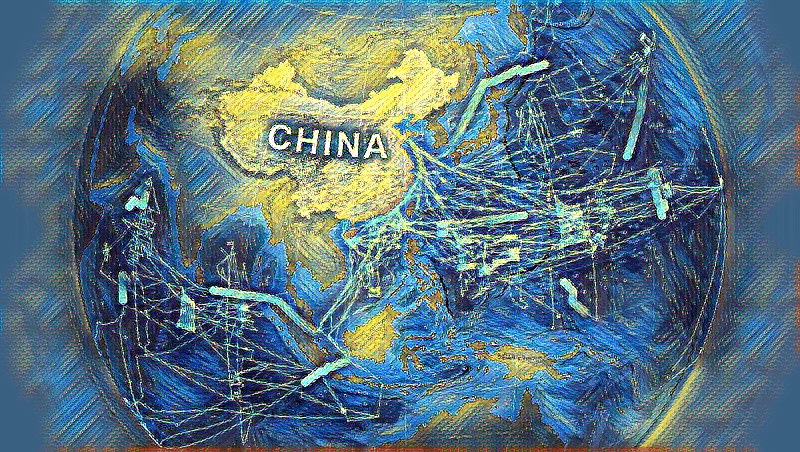
An investigation by CNN and Mongabay reveals that Chinese deep-sea mining research vessels spend only about 6% of their time in licensed exploration areas, instead conducting extensive seabed mapping in strategically sensitive regions like Guam, Taiwan, and undersea cable routes, raising dual-use and environmental concerns.

Limited Time in Designated Mining Zones

  • Analysis of MarineTraffic and Deep Sea Mining Watch data shows that over five years, eight tracked vessels, including the Xiang Yang Hang 01, dedicated minimal time to their International Seabed Authority (ISA)-licensed exploration areas.
  • For example, the Hai Yang Di Zhi Liu Hao surveyed outside its license zone in the Northwest Pacific and transited through US military hubs like Guam and the Northern Mariana Islands.

Dual-Use Activities and Military Links

  • Vessels frequently disable their Automatic Identification System (AIS) to avoid detection and regularly call at ports linked to the Chinese navy, such as Sanya, a strategic naval base.
  • Experts link these patterns to China's military-civilian fusion policy, with over a dozen naval and academic sources suggesting the vessels serve both scientific and strategic military purposes.
  • The ships are part of China's world-largest blue-water research fleet, operated by state-affiliated entities with navy ties.
Ad slot

Environmental Risks of Deep-Sea Mining

  • Mining targets polymetallic nodules, sulfides, and ferromanganese crusts rich in manganese, nickel, copper, cobalt, and rare earth elements, critical for defense and green technologies.
  • A December 2025 Nature study found a 37% reduction in animal abundance in mined areas of the Clarion-Clipperton Zone, prompting 40 countries and scientists to call for a moratorium.
  • China asserts adherence to ISA environmental standards, but critics warn of irreversible damage to million-year-old ecosystems.

Surveillance and Strategic Mapping Concerns

  • Vessels have mapped areas around Guam, Taiwan's east coast, and undersea communication cables, potentially for acoustic monitoring of submarines and surveillance.
  • The Xiang Yang Hong 03's focused survey over a trans-Pacific cable in 2023 was termed a "smoking gun" for dual-use operations by maritime analysts.
  • Activities near Taiwan, such as the Tan Suo Er Hao operating near the Philippines, align with China's military intimidation tactics in the region.

US-China Geopolitical Competition

  • China holds five of 31 ISA exploration contracts, while the US, not ratified to UNCLOS, uses Trump's 2025 executive order to bypass international rules and accelerate mining for national security.
  • Both nations are competing in the Cook Islands, with China signing research agreements in 2025 and the US funding mapping expeditions, sparking local fears of superpower rivalry.
  • The US Bureau of Ocean Energy Management is assessing leases in the Pacific and off US coasts, while China criticizes US actions as undermining international law.

China's Broader Maritime Ambitions

  • China is constructing a permanent deep-sea research station in the South China Sea by 2030, focusing on cold-seep ecosystems to bolster its presence in contested waters.
  • Increased Arctic activities, including transits near Alaska and Russia's EEZ, show coordination with Russia and strategic probing of US defenses.
  • Experts warn that the race for seabed minerals could escalate US-China tensions and harm marine environments, with no evidence of significant friction yet over mining sites.
Ad slot