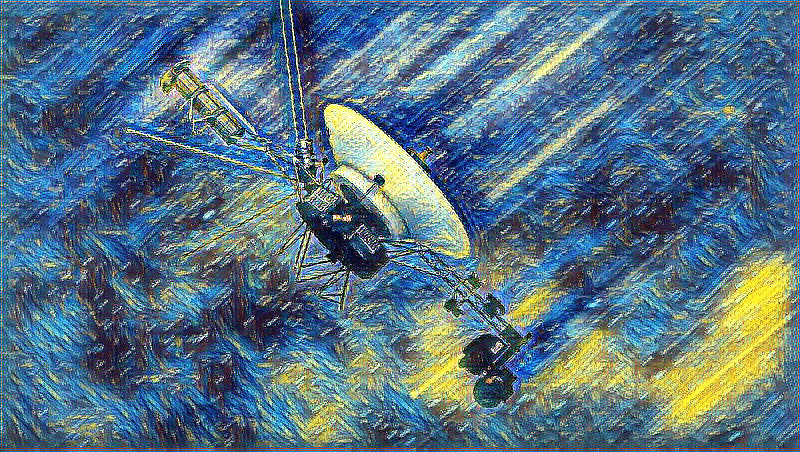
NASA has commanded the deactivation of a key science instrument on Voyager 1 to conserve power as the spacecraft continues its journey into interstellar space, paving the way for an ambitious power-saving upgrade.
Power Conservation in Interstellar Space
The Low-energy Charged Particles experiment (LECP) on Voyager 1 was powered down on April 17th. This action is part of a strategic effort to manage the limited power supply as the probe travels farther from Earth into uncharted interstellar regions. The LECP instrument, which measures the structure of space between stars, was previously turned off on its twin, Voyager 2, in March 2025.
- Mission Context: The Voyager probes were launched in 1977 and were initially equipped with ten science instruments for flybys of Jupiter, Saturn, Uranus, and Neptune.
- Current Status: Voyager 1 is currently located approximately 25.40 billion kilometers (16 billion miles) from Earth, while Voyager 2 is about 21.35 billion kilometers (13 billion miles) away.
- Significance: The probes are the only active spacecraft beyond the heliosphere—the magnetic bubble surrounding the Sun—and have required instrument shutdowns to extend their operational lifespan beyond the initial five-year projection.
The 'Big Bang' Upgrade Plan
Engineers are preparing for a major power management overhaul, nicknamed the “Big Bang.” This complex procedure aims to extend the missions by optimizing power usage.
- Power Source: Both probes rely on radioisotope thermoelectric generators (RTGs), which convert heat from decaying plutonium into electricity. These generators lose an estimated 4 watts of power annually.
- The Challenge: Engineers must balance the need to keep the probes warm enough to prevent freezing (which would halt antenna pointing) against the constant drain of power.
- The Plan: The team plans to execute a major swap: powering down certain devices while activating alternatives that consume less energy. This process will be done sequentially.
- Test Phase: Voyager 2, being slightly closer and having marginally more power, will serve as the initial test subject in May and June.
- Primary Target: If successful on Voyager 2, the maneuver will be attempted on Voyager 1 in July.
- Goal: A successful 'Big Bang' could potentially allow the LECP instrument to be reactivated, enabling continued data collection on cosmic rays and solar particles.
Instrument Details and Contingencies
The LECP instrument is crucial as it provided data confirming when the Voyagers crossed from the solar system into interstellar space. Its subsystems include a telescope and a magnetospheric particle analyzer, which utilize a rotating platform powered by a low-draw stepper motor.
- Unexpected Dip: The need for this proactive shutdown was highlighted by an unexpected drop in Voyager 1’s power levels noticed during a routine roll maneuver on February 27th.
- Failsafe Risk: If power drops too low, an automatic undervoltage fault protection system engages, shutting down components. Recovering from this state requires significant, risky ground intervention.
- Expert View: Mission managers emphasized that while shutting down instruments is not preferred, it is the necessary measure to maintain the mission's longevity and scientific data stream.