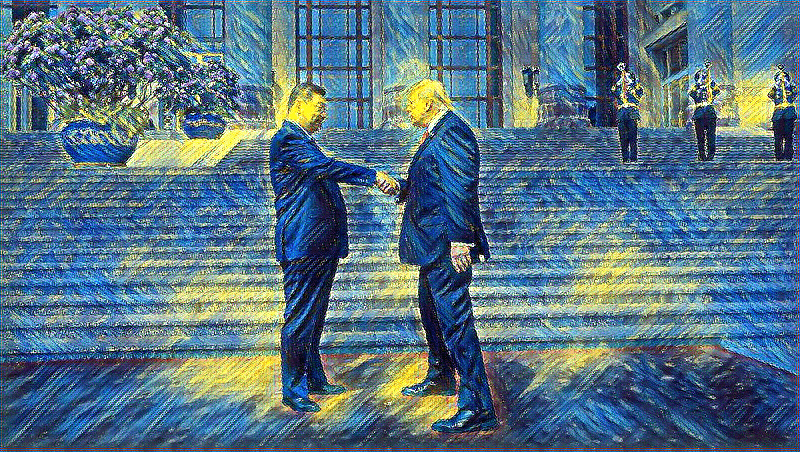
Discussions between President Donald Trump and Chinese leader Xi Jinping are anticipated to heavily focus on tariffs, especially as a temporary trade truce is set to expire in November.
Tariffs as Key Negotiation Leverage
Since his initial term, Donald Trump has utilized tariffs as a primary tool of leverage during economic negotiations with China. Upon returning to office last year, he resumed the trade dispute by imposing sweeping new tariffs, which at one point reached as high as 145% on Chinese goods.
- Subsequent discussions led to reductions in these punitive tariffs, bringing them down to double-digit levels.
- A summit held in South Korea last October extended these tariff reductions for an additional year.
Legal Challenges Complicate Tariff Policy
Trump's fluctuating tariff policies have faced significant legal hurdles, complicating any potential agreements.
- Supreme Court Ruling: In February, the U.S. Supreme Court ruled that much of the broad tariffs imposed by Trump on numerous trading partners, including China, were illegal. This ruling specifically covered levies related to illicit fentanyl drugs and so-called “reciprocal” tariffs.
- Reimposition Efforts: Following the ruling, Trump attempted to reimpose global tariffs of 10% under a different trade statute. Morgan Stanley estimated that under this revised framework, the weighted average tariff rate on Chinese goods would decrease from 32% to 24%.
- Ongoing Uncertainty: However, uncertainty persists, as Trump's 10% levy was challenged in court last week—the second major legal setback to his tariff policy this year—though an appeal was successful, and the president vowed to impose tariffs through alternative means.
New Investigations and Counter-Probes
The Trump administration has initiated new investigations that could result in further tariffs this year:
- Section 301 Probes: The administration launched investigations under Section 301 concerning China's alleged excess industrial capacity and failures to enforce anti-forced labor laws.
- China's Response: China has repeatedly voiced strong opposition to these investigations, urging the U.S. to resolve issues through dialogue.
- Beijing's Counter-Measure: A spokesperson for China’s commerce ministry stated in March that Chinese authorities would launch their own probe into U.S. trade barriers and take corresponding measures to safeguard China's legitimate rights and interests.