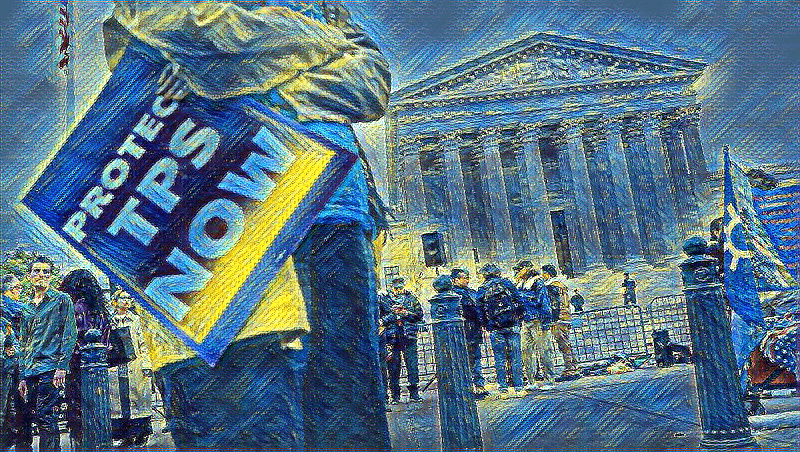
The Supreme Court appeared poised to support President Donald Trump's efforts to terminate Temporary Protected Status (TPS) for migrants from countries like Haiti and Syria. The core legal debate centered not on the legality of ending TPS, but rather on the scope of federal court review over such administrative decisions.
Understanding Temporary Protected Status (TPS)
- TPS is a designation that allows the U.S. administration to permit migrants from countries experiencing strife or natural disasters to remain and work in the United States.
- The law grants the administration broad discretion regarding the designation's activation or deactivation.
Focus of the Legal Challenge
The legal arguments before the court highlighted two main areas of contention:
- Procedural Review: Attorneys representing Syrian TPS beneficiaries argued that while the final TPS decision might be immune from review, the administrative process used to reach that decision was subject to scrutiny. They alleged this process was influenced by what they termed Trump's "racial animus" against Haitians, Syrians, and others.
- Legal Rationale: Justice Amy Coney Barrett and other justices questioned the legal basis that purportedly restricted review only to the final determination of TPS eligibility.
Judicial Observations and Context
- Justice Kavanaugh's Note: Justice Brett Kavanaugh pointed out that the current situation on the ground in Syria differs significantly from the conditions that prompted the initial TPS designation for the country.
- Migrant Advocates' Stance: Counsel for the migrants emphasized the importance of maintaining public trust in the government's ability to conduct thorough and lawful reviews.
- Trump's Actions: As part of immigration enforcement actions, President Trump has ended, rather than extended, TPS for all 13 countries whose designations were set to expire.
A final ruling on this matter is anticipated by the end of June.