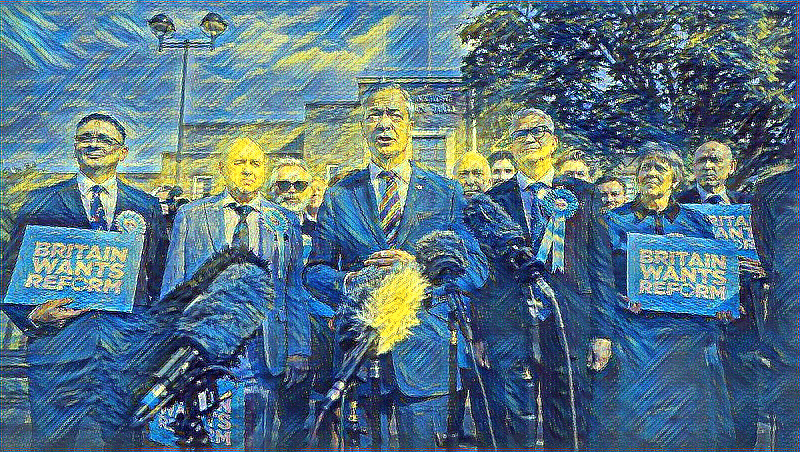
Reform UK Gains in Local Elections, Pressuring Starmer's Labour
Reform UK, led by Nigel Farage, achieved significant gains in England's local elections, securing over 600 seats, while the Labour Party lost more than 450 seats. These results signal a major fracturing of Britain's traditional two-party political structure. Prime Minister Keir Starmer acknowledged voter dissatisfaction but vowed not to resign, despite mounting pressure. The vote is visibly splitting between Reform UK, the Green Party, and the Liberal Democrats. Experts suggest that the fragmentation is weakening the established parties, while the government faces questions regarding its policy direction and leadership stability.
Ad slot
The hard-right Reform UK party, led by Nigel Farage, achieved significant gains in England's local elections, placing mounting pressure on the governing Labour Party and signaling a deeper fracture in Britain's traditional two-party system.
Election Results Overview
Early results from the local elections revealed a substantial shift in political allegiance across England. The key outcomes included:
Reform UK: Gained over 600 seats.
Labour Party: Lost more than 450 seats.
Conservative Party: Lost nearly 300 seats.
Nigel Farage, a prominent figure associated with Brexit, declared that Reform UK was no longer merely a protest vote but a "truly national party" positioned for sustained influence.
Political Fallout and Leadership Concerns
The results immediately cast doubt on the stability of the current government. Prime Minister Keir Starmer acknowledged voter dissatisfaction with the pace of change under his administration, which secured a landslide victory in July 2024. Despite the losses, Starmer firmly stated his intention not to resign, asserting, "I’m not going to walk away and plunge the country into chaos."
Ad slot
John Curtice, a leading polling expert, noted that once all 5,000 contested council seats are declared, Labour could face net losses exceeding 1,200 seats, suggesting deep dissatisfaction with the government's policies.
The Multi-Party Fragmentation
The election results confirm that British politics has moved away from a simple Labour-Conservative duopoly. Instead, the vote is fragmenting across several groups:
Reform UK: Attracting support from traditional Conservative voters, notably gaining control of the Essex county council after 25 years of Tory rule.
The Green Party: Drawing support from disaffected Labour voters, particularly in urban centers like Hackney, where the Greens elected a new mayor.
Liberal Democrats: Continuing to capture votes, further weakening the established parties.
Farage highlighted that these gains demonstrated a challenge to the traditional dominance of both Labour and the Conservatives, suggesting a shift toward a focus on "patriotic ideas" over traditional left-right divides.
Strategic Implications and Future Outlook
Analysts point to several strategic dynamics shaping the political landscape:
Voter Leakage: Curtice observed that Labour's vote tended to suffer more when the Greens performed strongly, suggesting a split in the left-wing vote that benefited Reform.
Government Response: Starmer's initial strategy to appeal to right-wing voters with tougher rhetoric reportedly backfired, contributing to the continued surge of Reform UK.
Internal Labour Dynamics: Questions regarding Starmer's leadership fitness have been raised by some Labour figures, though government ministers have urged unity, advising against leadership changes during the current period of governance.