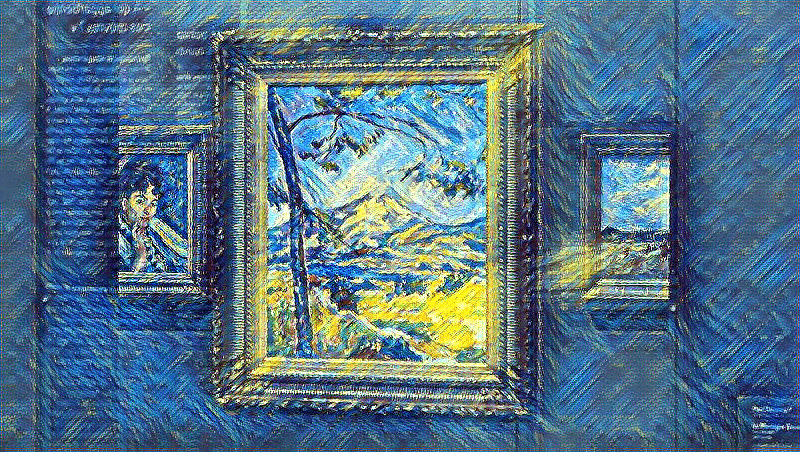
The Musée d'Orsay in Paris has unveiled a permanent exhibition dedicated to artworks believed to have been looted by the Nazis during World War II, marking a significant step in France's reckoning with its wartime past.
The 'Who Owns These Works?' Exhibition
The museum has launched the exhibition titled “Who owns these works?” This space is dedicated to displaying a rotating selection of 225 pieces whose provenance—or ownership history—is currently undetermined. Currently, the exhibition features twelve paintings and one sculpture.
- Key Artists Featured: The collection includes works by prominent artists such as Pierre-Auguste Renoir and Edgar Degas.
- Focus: The exhibit highlights the ongoing efforts by the museum to research the origins of these pieces with the ultimate goal of returning them to their rightful heirs.
Historical Context of Art Loss
France experienced significant upheaval during WWII. The northern region was directly occupied by Nazi Germany, while the southern areas fell under the collaborationist Vichy regime, which was involved in the deportation of Jewish populations.
- Scale of Looting: A 1997 report by the Working Party on the Spoliation of Jews in France estimated that approximately 100,000 artworks were looted across France during the war.
- Recovery Efforts: Of the recovered pieces, about 60,000 were found in Germany and Austria after the war. Three-quarters of these were returned to owners or descendants, but an estimated 15,000 pieces could not be traced due to unknown original owners or heirs.
Museum Stewardship and Provenance Research
While much of the art was sold by the French state in the 1950s, 2,200 works were retained by national museums for safekeeping, falling under the responsibility of the MNR (National Museums Recovery).
- Progress: Over the last three decades, 15 MNR works held at the Musée d’Orsay have already been successfully returned to their owners.
- Current Work: The museum employs a specialized team of provenance researchers to investigate the history of these unclaimed artworks.
Examples of Displayed Works
The exhibition showcases diverse examples of looted art, illustrating the complexity of provenance research. Notable examples include:
- Alfred Stevens: A painting by the Belgian artist, acquired in 1942 by a German art dealer for “Hitler,” whose original owner remains unidentified.
- Edgar Degas: A ballroom scene reportedly acquired in 1919 by Fernand Ochsé, a Jewish collector who was later deported to Auschwitz.
Institutional Commitment and Public Impact
Annick Lemoine, President of the Musée d’Orsay, stated that addressing Nazi-looted art is a “priority focus” for French museums, emphasizing that the issue is “more relevant than ever.” She noted that the gallery aims to educate the public about the history of the Nazi regime and the personal stories behind the art.
The exhibition experience extends beyond viewing the art; visitors learn about the rigorous process of establishing provenance and facilitating returns. Antony Easton, a British man whose family history mirrors the struggle for recovered heritage, praised the museum’s initiative, stating it aids the national dialogue regarding the Second World War.