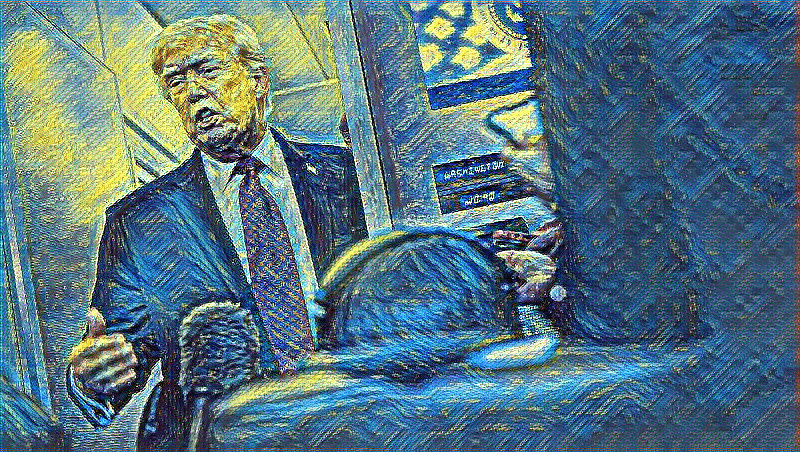
Reports indicate that former President Donald Trump's statements regarding the Iran conflict have been marked by significant inaccuracies, leading experts to question the reliability of his claims.
Inaccurate Statements on Diplomacy and Travel
Trump made several public statements that contradicted established facts regarding diplomatic movements and agreements. For instance:
- Vice President JD Vance Travel: On Monday, Trump told The New York Post that Vice President JD Vance was en route to Pakistan for negotiations with Iran. However, sources later informed CNN that Vance was scheduled to depart for Pakistan on Tuesday for talks beginning Wednesday.
- Contradictory Statements: This was not an isolated incident; Trump's remarks regarding Vance's travel were inconsistent, as he had previously told MS NOW that Vance would not be part of the delegation for security reasons, only for subsequent reports to contradict that.
Pattern of Misinformation on the Iran Conflict
Experts point to a pattern of questionable claims, suggesting that the administration's statements on the Iran issue are unreliable. Eric Brewer, a former National Security Council counterproliferation official, noted that the current US-Iran diplomacy involves a president who is "outspoken and prone to exaggeration, fabrication, and outright lies."
These inaccuracies spanned several key areas:
- Strait of Hormuz: After Iranian Foreign Minister Abbas Araghchi stated the strait would be "completely open" during a ceasefire, Trump posted that the situation was "over" and that Iran agreed never to close it. This contradicted reports of ongoing US blockades and Iranian officials requiring specific approvals and tolls for passage.
- Nuclear and Military Claims: Trump made several other unsubstantiated claims, including suggesting Pope Leo XIV stated Iran could possess a nuclear weapon, and claiming that Iran's military capabilities were nonexistent, despite evidence to the contrary.
Difficulty in Assessing Truthfulness
Assessing the veracity of any potential US-Iran deal is complicated by the conflicting narratives from all sides. While Trump made triumphant declarations about major concessions—such as an "unlimited" moratorium on nuclear activities or an end to support for proxy groups—Iranian officials quickly refuted these claims. A spokesperson for the Iranian foreign ministry stated that enriched uranium "will not be transferred anywhere under any circumstances."
Ultimately, the frequency of contradictory statements from both the US political figures and Iranian leadership makes it difficult for observers to rely on any single source until concrete proof emerges.