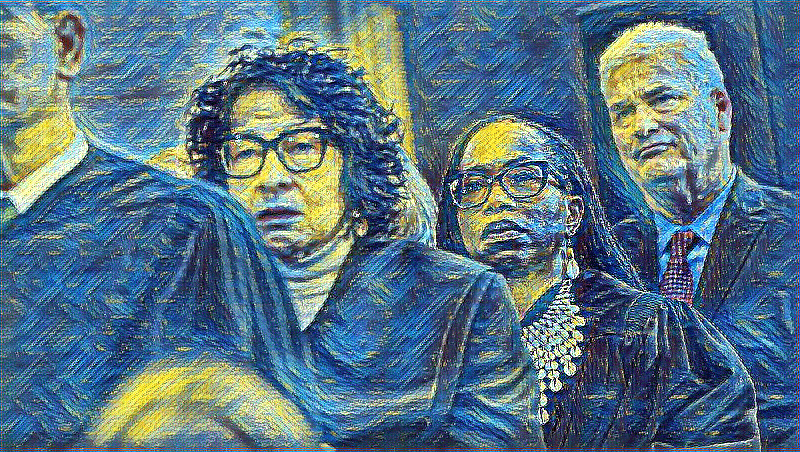
Tensions are mounting within the federal judiciary as Supreme Court justices openly debate the handling of emergency appeals, a process critics call the 'shadow docket.' The controversy centers on the lack of transparency and the potential for real-world harm caused by rapid, non-traditional rulings.
The Debate Over the 'Shadow Docket'
The Supreme Court's emergency docket has become a flashpoint for internal conflict among justices. Critics, including senior liberal Justice Sonia Sotomayor and Justice Ketanji Brown Jackson, have publicly criticized the process for lacking due process, transparency, and proper deliberation. Conversely, other justices, such as Brett Kavanaugh, have defended the docket, arguing that it is necessary for the court to rule quickly on urgent matters.
Jackson, in a public address, criticized the court's handling of quick-turn cases, stating that the court's 'scratch paper musings' can cause 'real-world harms.' She contrasted the current environment with the judicial process two decades prior.
Procedural Concerns and Lower Court Debate
A major point of contention is the nature of the rulings themselves. Unlike traditional 'merits cases,' which take months or years and involve full oral arguments, the shadow docket allows the court to decide if a policy remains in effect immediately. Because of the speed required, the court often issues interim orders with little explanation of its reasoning.
This has led lower courts to openly question whether these emergency orders carry the weight of binding precedent. Concerns raised by judges include:
- Lack of Full Briefing: Interim orders are frequently issued without comprehensive legal briefing or oral arguments.
- Precedent Risk: Treating these temporary orders as binding precedent risks weakening the public's confidence in the judicial system's commitment to deliberation and reasoned constitutional law.
Context and Future Cases
As the Supreme Court prepares for its most intense period of the year, justices are working on major merits appeals concerning significant issues, including:
- The scope of presidential power to fire federal officials.
- Efforts to alter citizenship status.
- Midterm election regulations.
While the volume of emergency cases has lightened this year compared to previous years, the debate persists. Defenders of the process argue that the court must rule one way or another when an emergency case is presented, and the justices do not control which cases the executive branch files.
Judicial Responses and Divergent Views
The criticism has prompted varied responses from the justices and lower court judges:
- Sotomayor's Criticism: Sotomayor has repeatedly criticized the process, suggesting the Supreme Court itself is responsible for the recent flood of emergency cases.
- Kavanaugh's Defense: Kavanaugh has defended the docket, arguing that the court must rule on the merits of the case regardless of the political context, and that the criticism is sometimes based on the underlying political issue.
- Lower Court Caution: Some federal judges, like US Circuit Judge James Wynn, have cautioned against treating interim orders as binding precedent, emphasizing the need for reasoned opinions over emergency motions.