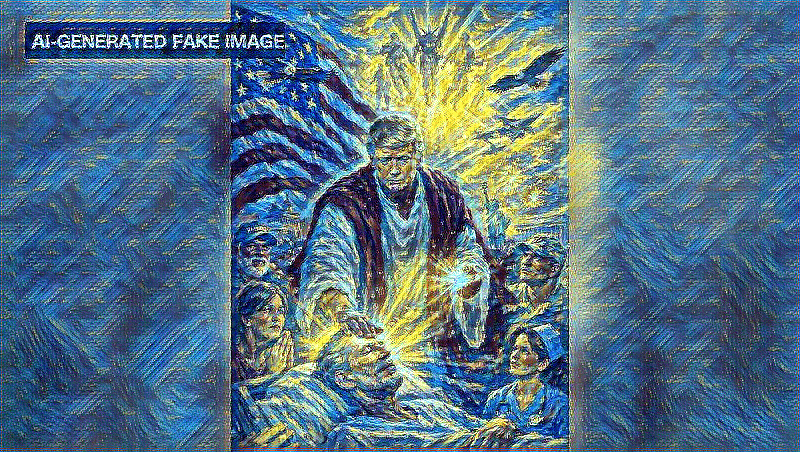
Donald Trump recently posted an AI-generated image depicting himself as Jesus Christ on Truth Social, triggering a widespread backlash from Christian communities who denounced the act as blasphemy. The controversy highlighted the complex intersection of political self-promotion and religious iconography in modern public life.
The Incident and Initial Reaction
On Sunday, Donald Trump shared an image on Truth Social that appeared to be AI-generated, portraying him in the style of a healer dressed in red and white robes common in biblical art. The image depicted Trump resting a hand on an ailing man's forehead, with a beam of divine light emanating from the other, set against a background featuring the American flag and warplanes.
- The Imagery: The depiction was highly stylized, showing Trump in a role reminiscent of Christ.
- The Backlash: Christians across various traditions, including many who otherwise support Trump, roundly condemned the post as blasphemy. Some critics escalated the accusation, labeling it an "Antichrist spirit."
Aftermath and Denial
Following the intense criticism, the post was deleted. When questioned by reporters, Trump denied that he was portraying himself as Jesus, stating instead that the image was meant to show him as a doctor helping people. This incident follows previous instances where Trump has used religious imagery for self-promotion, including an AI image of himself as the Pope.