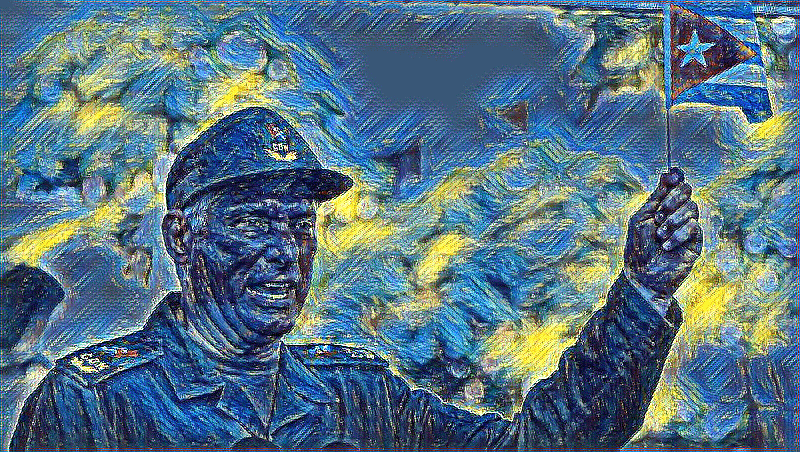
Cuban President Vows Resistance to US Forces After Bay of Pigs Anniversary
Cuban President Miguel Díaz-Canel delivered a strong address in Havana, commemorating the 65th anniversary of the Bay of Pigs invasion. During the event, he declared that while Cuba does not desire conflict, the nation is fully prepared to resist and win against any potential military aggression from the United States. These remarks come amid escalating geopolitical tensions, following recent threats from the US and a US military operation in Venezuela.
The ongoing US oil blockade has severely crippled Cuba's economy, leading to widespread power shortages and critical shortages of fuel and medical supplies. The US has simultaneously pressured the Cuban government to undergo political and economic liberalization. Meanwhile, the Castro family, including Mariela Castro, has remained visible, assuring that the leadership is prepared for any international developments.
Ad slot
Cuban President Miguel Díaz-Canel declared that while Cuba does not seek conflict, the nation is fully prepared to resist and defeat any potential military aggression from the United States. The statement was made during a commemoration of the 65th anniversary of the failed 1961 Bay of Pigs invasion, highlighting persistent geopolitical tensions between the two nations.
The Anniversary Address
Díaz-Canel, addressing a crowd of government supporters in Havana, spoke about the historical significance of the 1961 Bay of Pigs debacle, which Cuban officials have long cited as a pivotal moment cementing support for the socialist revolution. During his speech, the Cuban leader issued a stark warning regarding external threats, stating:
"We have to be ready to resist serious threats, including military aggression."
"We do not seek it, but it is our duty to prepare to avert it, and, should it prove inevitable, to win it."
He concluded by emphasizing the national will, adding that as long as the people are willing to fight for the revolution, Cuba will remain victorious.
Escalating US-Cuba Tensions
Ad slot
The comments came three days after US President Donald Trump again threatened the communist-run island with potential military strikes. This rhetoric follows a period of heightened instability in the region, including a US military operation in Caracas that captured Venezuelan leader Nicolás Maduro, a staunch ally of the Cuban government.
The geopolitical friction is compounded by the ongoing US oil blockade, which has severely impacted Cuba’s economy and infrastructure. The blockade has resulted in:
Major power shortages across the island, often lasting for most of the day.
Significant strain on healthcare facilities, limiting the ability to treat thousands of patients.
Acute scarcity of fuel, severely disrupting daily life and commerce.
Political and Economic Fallout
The US administration has repeatedly called on the Cuban government to open the island politically and economically. Furthermore, US officials have reportedly contacted members of the Castro family to negotiate a deal with Raúl Castro, who retired in 2021 but remains a key figure in the island's political system.
During the ceremony, Mariela Castro, a member of the National Assembly and daughter of Raúl Castro, addressed the rumors of negotiations. When questioned about the family's role, she stated that the family is actively preparing and is "not alarmed" by the threats, signaling a unified and prepared response from the Cuban leadership.
Ad slot
Cuban President Vows Resistance to US Forces After Bay of Pigs Anniversary • BriefNews