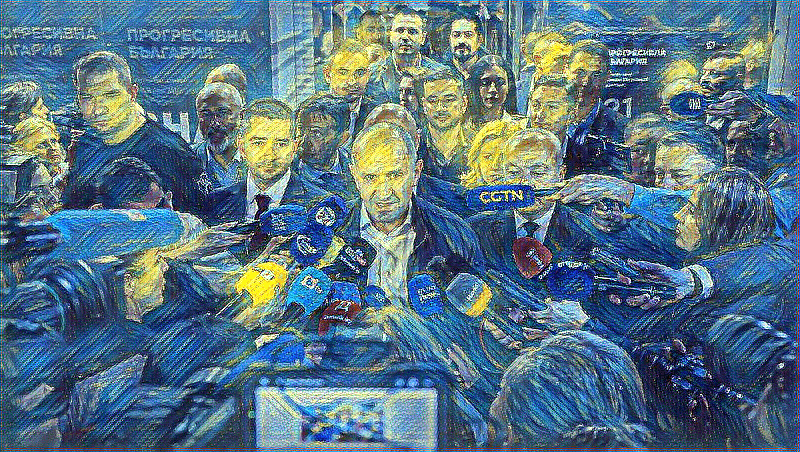
Former President Rumen Radev is projected to secure a commanding victory in Bulgaria's parliamentary elections, potentially ending years of political instability and sidelining established political forces.
Election Results and Political Landscape
Official results indicate that Radev's Progressive Bulgaria party achieved a significant showing. As of the counting of 60% of the ballots, the party secured 44.6% of the vote. This performance suggests the potential for a strong minority government, although Radev has indicated openness to forming a coalition with either a pro-European group or a smaller party.
Key results compared to other major parties include:
- Progressive Bulgaria (Radev): 44.6% (after 60% count)
- We Continue the Change-Democratic Bulgaria (PP-DB) Coalition: 14.2% (Pro-European bloc)
- GERB Party: 13% (Led by former Prime Minister Boyko Borissov)
These results mark one of the strongest single-party performances in a generation and could bring an end to the cycle of frequent coalition governments that has plagued the nation.
Radev's Campaign Platform and Appeal
Radev, a euroskeptic and former fighter pilot, campaigned on a wave of public frustration regarding systemic corruption and the perceived stagnation of long-ruling political parties. He stepped down from the presidency to contest the election following mass protests that ousted the previous administration in December.
- Core Appeal: Voters expressed fatigue with political instability and corruption within the 6.5 million-person nation.
- Radev's Stated Goal: He framed his victory as a triumph of 'hope over distrust' and 'morality.'
Foreign Policy and Economic Ambiguity
Radev's campaign has drawn comparisons to figures like Hungary's Viktor Orbán due to his rhetoric concerning improved ties with Moscow and the potential resumption of Russian oil and gas flow into Europe. He has also publicly criticized the European Union's over-reliance on renewable energy sources.
Despite these statements, Radev's stance on foreign policy remains notably vague. As a NATO member and a country that joined the Eurozone in January—a move Radev himself has criticized—his future policy direction is unclear.
However, on Sunday, he signaled a willingness to collaborate with the PP-DB coalition on judicial reform, while affirming that Bulgaria would 'make efforts to continue on its European path.'
Underlying National Challenges
While Bulgaria has seen significant development since the fall of communism in 1989, including joining the EU in 2007 and achieving low unemployment, the nation faces persistent economic and demographic hurdles. The cost of living has emerged as a major concern, particularly since Euro adoption. Experts point to the economic and demographic crises as the country's primary challenges, noting a lack of clear policy solutions within the leading political factions on these issues.