Artemis II Astronauts Discuss Historic Moon Journey and Space Challenges
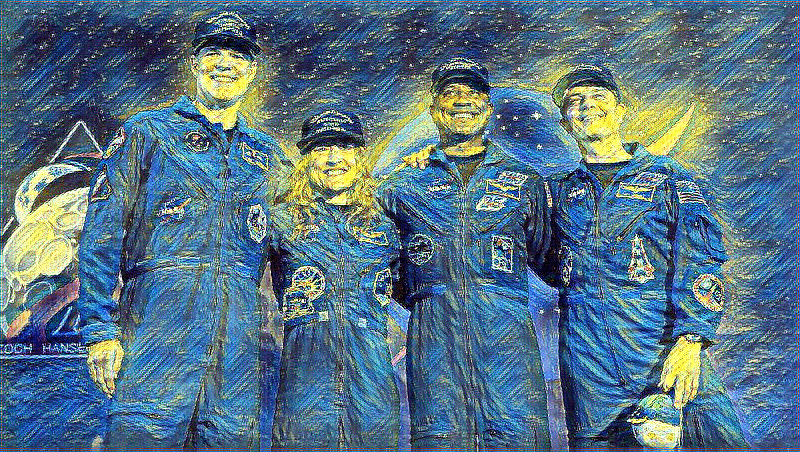
The Artemis II astronauts, Reid Wiseman, Victor Glover, Christina Koch, and Jeremy Hansen, are holding a press conference following their historic 10-day mission around the Moon. The journey marked the first human trip to the Moon since the Apollo program in 1972 and surpassed previous records by reaching deeper space. The crew detailed the challenging return process, which included a high-speed reentry through Earth's atmosphere and a six-minute communications blackout. They also spoke about the deep bond formed among the crew members during their time in space, emphasizing the mission's role in inspiring global unity and advancing space exploration.
Ad slot
The four astronauts of the Artemis II mission are holding a press conference to answer global questions about their recent, historic journey around the Moon. The event marks the first time humans have traveled to the Moon since the Apollo era, drawing intense international interest in the success of NASA's deep space exploration efforts.
Mission Overview and Global Impact
The Artemis II crew—comprising NASA astronauts Reid Wiseman, Victor Glover, and Christina Koch, alongside Canadian Space Agency astronaut Jeremy Hansen—returned to Earth after a demanding 10-day slingshot trip around the Moon. The mission achieved several historic milestones:
It marked the first human journey to the Moon since the final Apollo flight in 1972.
The crew also surpassed previous records by venturing deeper into space than any human before, exceeding the Apollo 13 record set in 1970.
During the press conference, Wiseman noted the overwhelming global support, stating that the mission was intended to be a unifying effort for the world.
Surviving Deep Space and Reentry
Ad slot
The crew faced extreme conditions upon their return. The reentry process was particularly challenging, requiring the capsule to hit Earth’s thick inner atmosphere while traveling at speeds over 30 times the speed of sound.
High-Speed Reentry: Glover described the experience as visceral, recalling the moment the Orion capsule went into free fall.
Technical Challenges: The crew endured a six-minute communications blackout caused by plasma generated by the vehicle's sheer speed.
Crew Bonds and Lunar Observations
Beyond the technical achievements, the astronauts highlighted the profound bond formed during their time together. After spending over a week in space, they described their relationship as one of deep kinship, forged by shared trials, including:
Living in confined quarters aboard the 16.5-foot-wide Orion spacecraft.
Experiencing remote isolation, including a period without radio communications more than a quarter million miles from Earth.
During the mission, the crew successfully captured striking images of the Moon, including a seven-hour flyby of the lunar surface, which was highly valuable both for science and public interest.