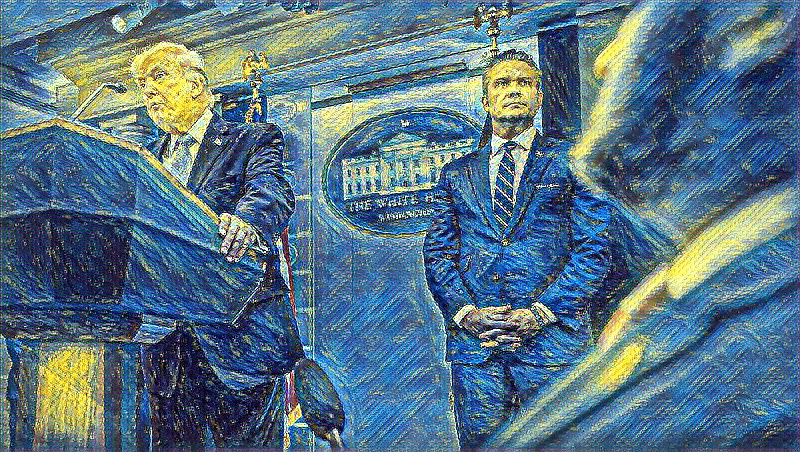
President Donald Trump and Defense Secretary Pete Hegseth have intertwined religious language with military threats against Iran, citing Easter themes and divine support while demanding compliance with U.S. conditions.
Trump's Easter-Linked Military Threats
- Trump stated that U.S. actions against Iran made for "one of our better Easters," comparing military operations to the Christian resurrection.
- He threatened to destroy all bridges and power plants in Iran by 12:00 AM on April 8, 2026, if Iran does not open the Strait of Hormuz and meet other demands.
- In a social media post, Trump wrote: "Time is running out - 48 hours before all Hell will reign down on them. Glory be to GOD!"
- When questioned about the legality of targeting civilian infrastructure, Trump dismissed concerns, emphasizing a plan for "complete demolition" but expressing reluctance to execute it.
Hegseth's Faith-Based Rescue Account
- Defense Secretary Pete Hegseth highlighted the rescue of a downed U.S. airman over the Easter weekend as a demonstration of faith.
- Hegseth said the airman's first message after activating an emergency transponder was "God is good," and described the pilot as "reborn" after being rescued on Easter Sunday.
- He linked the timeline—shot down on Good Friday, rescued on Easter Sunday—to a narrative of divine intervention, stating: "a pilot reborn, all home and accounted for, a nation rejoicing, God is good."
Legal and Ethical Scrutiny
- Trump's threats to bomb civilian infrastructure, such as bridges and power plants, potentially violate international laws of war that protect non-combatant targets.
- Trump acknowledged ordering the destruction of Iran's largest bridge as a "lesson" when negotiations stalled, claiming it was demolished within 10 minutes.
- He refused to identify any civilian sites that would be off-limits, underscoring U.S. military capability to cause widespread damage.
Background on U.S.-Iran Negotiations
- The U.S. demands focus on Iran opening the Strait of Hormuz, a key oil shipping route, and ensuring global oil supply stability.
- Trump's negotiating team, including Vice President JD Vance, reported Iranian backtracking on deal progress, leading to the bridge strike.
- The rescue operation was showcased as evidence of U.S. military prowess and, implicitly, divine favor.