BN
|
TechAI Desk4 views

Quantum Computing Firms Race to Market at Industry Inflection Point

Quantum computing firms Xanadu and Horizon have recently gone public via SPAC mergers despite market volatility, reflecting an industry shift from research to commercialization. These listings follow earlier SPAC debuts by IonQ and Infleqtion, as the sector nears an inflection point driven by scientific breakthroughs in error correction and qubit technology. The timeline for quantum advantage suggests initial demonstrations by 2028-2029, with broader commercial applications requiring further advancements by the mid-2030s. Investments are increasing from tech giants, while smaller firms pursue near-term revenue through software and cloud services. Governments worldwide are also heavily funding quantum initiatives for strategic benefits.

Ad slot
Quantum Computing Firms Race to Market at Industry Inflection Point

Quantum computing companies Xanadu and Horizon have gone public via SPAC mergers amid market volatility, signaling a shift from research to commercial focus as the industry approaches a critical inflection point.

Recent Listings via SPACs

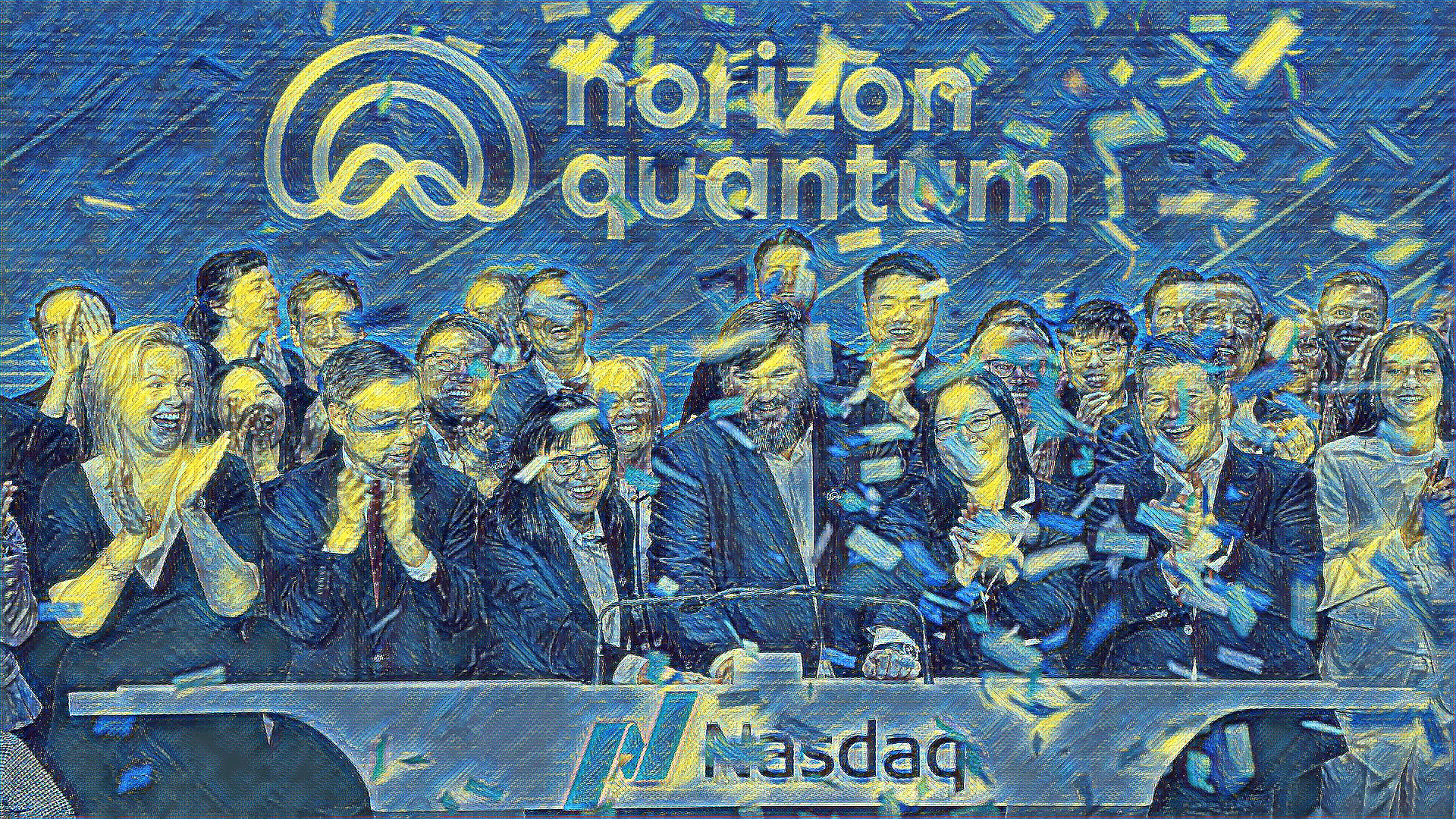
In March 2026, Xanadu Quantum, a developer of quantum hardware and software and a partner of Nvidia, began trading on the Nasdaq and Toronto Stock Exchange after merging with Crane Harbor Acquisition, a Special Purpose Acquisition Company (SPAC). Shares initially rallied 15% on the first day but fell over 10% in after-hours trading. A week prior, Horizon Quantum, based in Singapore, commenced trading following its merger with dMY Squared Technology Group, with its stock declining approximately 18% since its debut. These listings follow Infleqtion's February 2026 SPAC debut, which has seen its stock drop more than 30%, and IonQ's pioneering SPAC listing in 2021, making it the first publicly traded pure-play quantum computing company.

Why Now? Industry Inflection Point

Despite turbulent global markets, quantum firms are leveraging recent scientific breakthroughs to enter the public sphere. Dr. Joe Fitzsimons, CEO of Horizon Quantum, told CNBC, "We're really starting to hit something of an inflection point," highlighting significant advances over the past 18 months. Key milestones include:

  • Improved quantum error correction, essential for reliable machines.
  • Increased qubit counts, enabling more complex problem-solving.
  • Extended coherence times, reducing noise and errors for more reliable computations.

The Quantum Advantage Timeline

Ad slot

The industry targets "quantum advantage," where quantum computers solve real-world problems faster or more efficiently than classical supercomputers. According to Velu Sinha, partner at Bain & Company:

  • Initial demonstrations of practical quantum advantage are expected around 100 logical qubits by 2028-2029.
  • For commercially impactful applications like drug discovery or logistics optimization, 1,000 to 10,000 logical qubits are needed, likely achievable by the mid-2030s.

Investment and Commercialization Strategies

Investments in quantum computing are surging, with tech giants such as Alphabet, Microsoft, Amazon, and IBM committing substantial funds, though they typically avoid spinning out standalone public entities. Smaller quantum companies are focusing on near-term revenue streams to support long-term research:

  • Horizon Quantum develops software tools compatible with both classical and quantum systems.
  • Xanadu Quantum provides cloud-based platforms for developers to test quantum algorithms.

Matthew Kinsella, CEO of Infleqtion, emphasized that going public accelerates commercialization, with quantum sensing and timing expected to lead near-term markets.

Government Role and Strategic Importance

Historically, governments have been critical due to high capital requirements. The United States, China, and the European Union have invested billions in quantum research and commercialization, seeking strategic advantages in computing and cybersecurity.

Ad slot