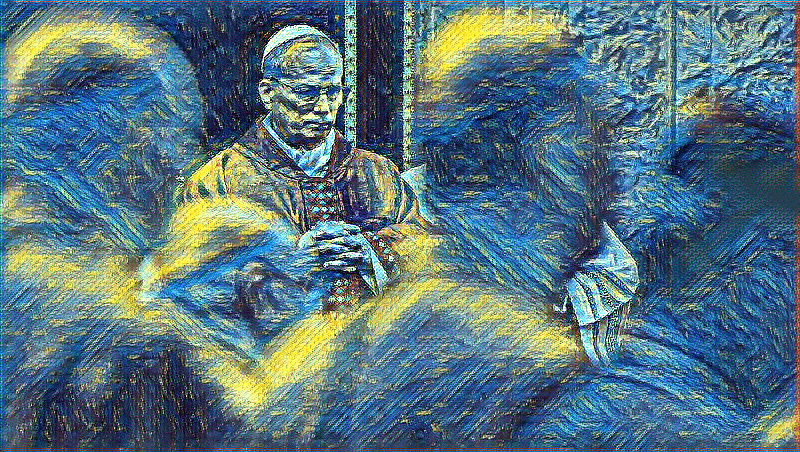
Pope Leo XIV has publicly rejected the use of religious justification for war, directly critiquing U.S. Defense Secretary Pete Hegseth and calling for an immediate "Easter truce" amid escalating conflicts in the Middle East.
Pope's Direct Holy Week Appeals
During Palm Sunday and Good Friday services, Pope Leo emphasized that Jesus "rejects war" and cannot be used to justify violence, stating, "He does not listen to the prayers of those who wage war but rejects them." In a rare public citation, he addressed President Donald Trump by name, hoping for an "off-ramp" to end the U.S.-Iran war. He also held separate phone calls with the presidents of Israel and Ukraine, urging negotiations over continued fighting.
- Called for an "Easter truce" on Good Friday.
- Directly appealed to Trump for diplomatic resolution.
- Engaged with Israeli and Ukrainian leaders to promote peace talks.
Contrast with U.S. Administration Rhetoric
The Pope's gentle, reserved demeanor contrasts sharply with President Trump's omnipresent and disruptive global presence. While Leo promotes quiet diplomacy, U.S. Defense Secretary Pete Hegseth frames the war effort as divinely supported, using scriptural justifications that Leo explicitly counters.
Theological and Ethical Opposition
Pope Leo quoted scripture to argue that war contradicts Jesus' message of peace, noting that those who wage war have hands "full of blood." Theologian Marcello Neri affirmed that Leo "strongly opposes Mr. Hegseth’s logic of violence justified in the name of God." Cardinal Robert McElroy of Washington, D.C., stated the war's "cascading global destructiveness" points to "illusions" and that disciples of the "Prince of Peace" must end the conflict. Archbishop Timothy Broglio expressed skepticism about the war's moral legitimacy under Catholic just war doctrine, questioning preemptive strikes against Iran's nuclear threat.
Historical Parallels and Reactions
Analysts compare Leo's urgent anti-war messaging to Pope John Paul II's opposition to the 2003 Iraq War. Conservative commentator Sohrab Ahmari, a Catholic convert, noted that papal warnings are often ignored, similar to 2003, and described the U.S.-Iran war as "manifestly unjust." Some Catholic supporters of Trump are said to obfuscate or oppose Leo's teachings.
Context and Long-Term Implications
Elected in 2025 as the first American pope, Leo's selection broke historical norms amid U.S. global dominance. His two decades in Peru provide international experience, shaping his diplomatic approach. At 70, his papacy may outlast the current U.S. administration, positioning him as a persistent, gentle yet firm voice for peace in turbulent times, with potential to influence global discourse on war and ethics.