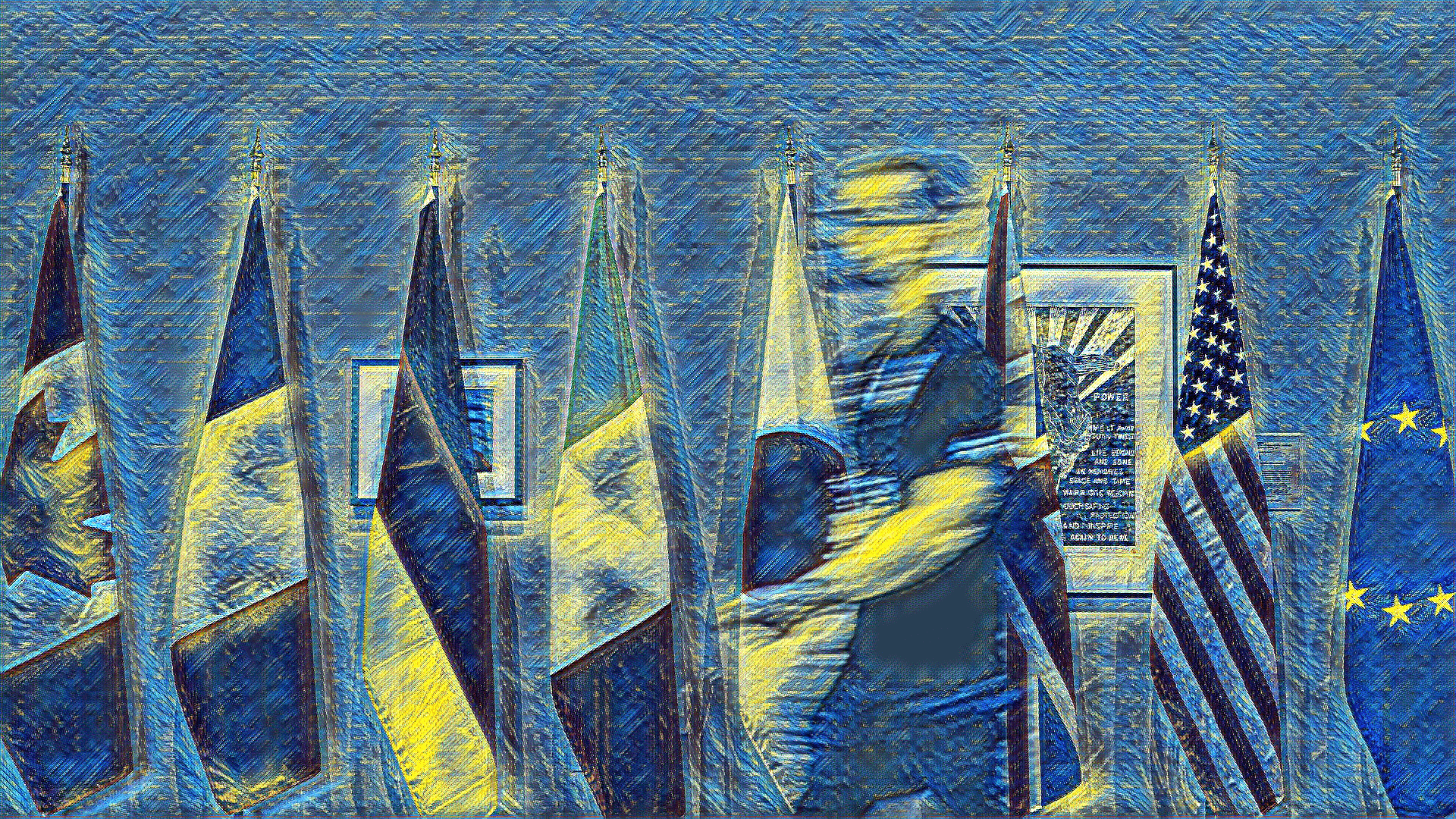
The flags of Canada, France, Germany, Italy, Japan, the United Kingdom, the United States, and the European Union ahead of the Group of Seven (G-7) Leaders' Summit in Banff, Alberta, Canada, on Saturday, June 14, 2025.
Expect more "grin and bear it" trading moments as investors keep trying to price multiple conflicting scenarios.
Today's round of "who is saying what" will be complicated by a G7 foreign ministers meeting in France, where representatives from the U.K., U.S., France, Germany, Canada, Italy and Japan have struggled to speak with one clear message.
Right now, talk is not cheap. The volatility triggered by conflicting reports of negotiations between the U.S. and Iran being underway, not underway, facilitated by mediators or even "negotiating with yourself" has caused billions (if not trillions) of dollars to be lost or made over the last few sessions.
Hello, this is Leonie Kidd writing to you from London. Welcome to another edition of CNBC's Daily Open.
Iran's foreign minister told state media on Wednesday that while Tehran had no intention of holding direct talks with the United States, an American proposal to end the war was under review.
However, earlier Wednesday, Iranian state media said that the country would reject a U.S. ceasefire offer and laid out its own list of conditions for ending the war, including granting Tehran control over the Strait of Hormuz. Iran's mission to the United Nations said Tuesday that "non-hostile vessels" would be able to pass through the strategic strait.
Today, attention will turn to France where the G7 foreign ministers will be meeting in the picturesque Abbey of Vaux-de-Cernay. In a statement issued ahead of the meeting, the group pledged to "seek avenues for negotiation to encourage de-escalation while promoting the security of civilian populations, the reopening of maritime and trade routes, and the cessation of the Iranian regime's nuclear and ballistic programs."