BN
|
WorldAI Desk2 views

China Secretly Expands Nuclear Arsenal, Sparking Arms Race Fears

China is secretly expanding its nuclear weapons infrastructure in Sichuan province, as evidenced by satellite imagery and government documents showing village demolitions and new facilities like the dome at Site 906. This modernization, the largest in decades, occurs after the New START treaty lapsed and aligns with President Xi's push for enhanced deterrence. The Trump administration seeks new arms control talks including China, but Beijing denies wrongdoing and upholds a self-defense policy. Experts warn this could trigger a complex new arms race, raising global security risks and potentially influencing dynamics around Taiwan. The expansion underscores China's rapid growth as a nuclear power, though it still lags behind the U.S. and Russia in arsenal size.

Ad slot
China Secretly Expands Nuclear Arsenal, Sparking Arms Race Fears

A CNN investigation reveals that China has been covertly expanding its nuclear weapons production infrastructure in Sichuan province, with villages demolished and new facilities constructed, marking its most significant nuclear modernization in decades.

Covert Expansion in Sichuan

  • Starting around 2021, Chinese authorities forcibly removed villagers in Sichuan, citing "state secrets" when questioned about land confiscations.
  • Satellite imagery and government documents confirm the demolition of villages like Baitu and Dashan to make way for nuclear sites.
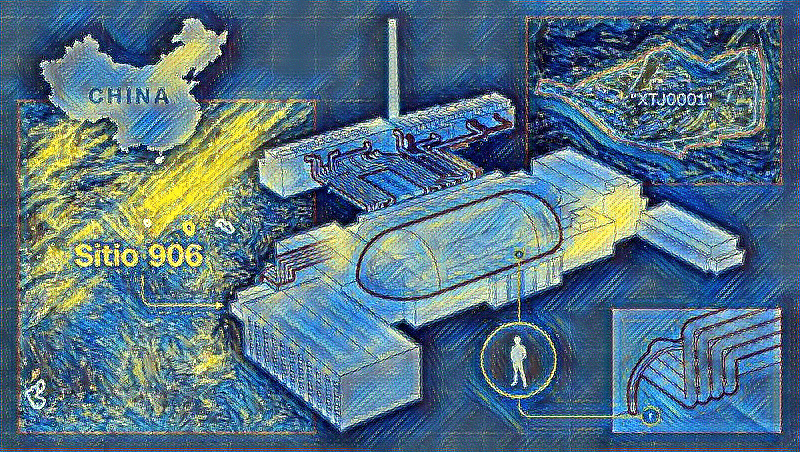
  • Key expansions include Site 906, featuring a large dome-like structure, and Site 931, with renovations to road-rail transfer points enhancing logistics.

Facilities and Modernization Efforts

  • The "906" site includes a 3,350-square-meter dome designed for handling radioactive materials like uranium and plutonium, equipped with radiation monitors and blast-proof doors.
  • Connected to at least three other nuclear bases via renovated roads, all within the Zitong county network known since the 1970s.
  • The "Science City" area, housing over a dozen CAEP research institutes, saw over 600 buildings demolished in 2022 for expansion.
Ad slot

Geopolitical Context and Official Responses

  • This buildup follows the expiration of the U.S.-Russia New START treaty and aligns with President Xi's 2021 directive to accelerate strategic deterrence.
  • The Trump administration plans to push for a new arms control agreement including China during an upcoming Beijing visit.
  • China denies U.S. accusations of nuclear testing violations, reiterating its "no first use" policy and self-defense stance, with officials calling allegations "distortions."

Expert Analysis and Global Risks

  • Experts like Jeffrey Lewis note the transformation indicates a fundamental upgrade in China's nuclear capabilities, potentially increasing production capacity.
  • Concerns include a new, complex arms race with China as a third major power, where qualitative capabilities may matter more than warhead counts.
  • Analysts warn that overestimation by the U.S. could fuel further proliferation, while China's strengthened arsenal may deter Western intervention in Taiwan scenarios.

Methodology

  • CNN analyzed satellite images, Chinese government documents, and declassified U.S. intelligence to identify and track expansions at key nuclear sites in Mianyang, Sichuan.
  • Focus on Site 906's construction phases and CAEP institute growth confirmed systematic modernization, though exact functions of some institutes remain unclear due to limited open-source data.
Ad slot