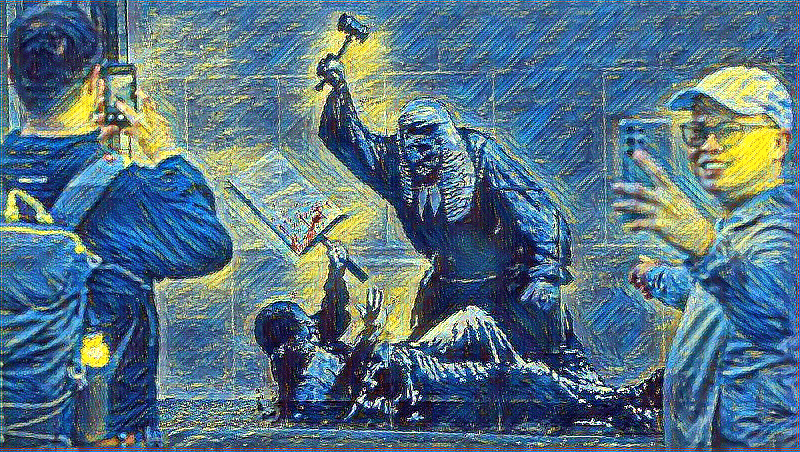
Banksy, the world's most elusive street artist, has been identified as Robin Gunningham, a middle-aged man from Bristol, England, per a Reuters investigation. This long-speculated revelation has ignited global discourse on anonymity's influence on artistic worth and creative expression.
The Identity Revelation
Reuters' extensive report names Robin Gunningham as Banksy, a claim previously echoed by the Mail on Sunday in 2008. Banksy has neither confirmed nor denied the findings, and his team did not respond to CNN inquiries. The potential effects on his artwork's production and market valuation remain unclear.
Anonymous Artists Weigh In
Other anonymous creators argue that secrecy enhances artistic integrity. Jerkface, a New York street artist, stated: "Visual art is one of the few fields where you can express ideas without revealing identity." He contended that unmasking Banksy "ruins the mystery," likening it to exposing wrestling's scripted nature. Hey Reilly, an Instagram-based AI artist, described anonymity as a "tool for creative freedom" and a rejection of modern self-promotion, noting it grants work "more universal resonance."
Expert Analysis on Market and Creative Impact
Art consultant Nico Epstein expressed disappointment, calling Banksy a "superhero" whose mystique may fade. He predicts a drop in both output and financial value, citing Banksy's politically charged pieces as potentially harder to produce post-revelation. Epstein contrasted this with rare successes like Basquiat and KAWS, noting most anonymous artists lack similar recognition: "Many want to sign trains without being identified by art history."
Anonymity Across Creative Fields
Anonymity transcends visual arts, with notable examples:
- Literature: The Brontë sisters used male pseudonyms; George Eliot (Mary Ann Evans) obscured her gender; Elena Ferrante's identity remains unproven; J.K. Rowling adopted Robert Galbraith for "liberating" privacy.
- Music: Sia and Daft Punk initially performed anonymously to avoid fame.
Friendred Peng of University of the Arts London explained that anonymity removes identity-based biases, letting art stand alone. "When broken, work may be re-anchored to personal context, reducing universality," Peng said.
Conclusion: Anonymity as Strategic Choice
The debate frames anonymity as an active artistic decision, not mere secrecy. While it can boost intrigue and creative liberty, its loss might shift public perception and economic dynamics, leaving Banksy's future legacy in flux.