BN
|
WorldAI Desk3 views

Archaeologist Believes D'Artagnan Remains Found in Maastricht

Archaeologist Wim Dijkman believes he has found the remains of D'Artagnan, the famous musketeer, in a Maastricht church. The discovery includes a musket ball and a 1660 coin, aligning with historical accounts of D'Artagnan's death in 1673. Inspired by historian Odile Bordaz, Dijkman pursued excavations for 25 years. DNA and isotope tests are pending to confirm the identity. Church officials find the evidence plausible but caution that certainty is not yet achieved, underscoring the need for scientific verification.

Ad slot
Archaeologist Believes D'Artagnan Remains Found in Maastricht

An independent archaeologist believes he has discovered the remains of the legendary French musketeer D'Artagnan in a Dutch church, potentially solving a centuries-old mystery.

Discovery in Maastricht

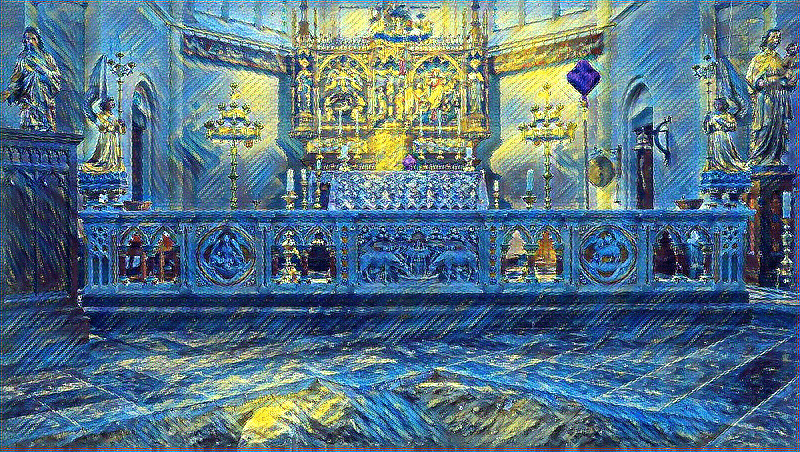
  • The skeleton was found buried in a tomb opposite the altar of the Church of St. Peter and St. Paul in Maastricht, Netherlands.
  • It was accompanied by a musket ball and a small bronze coin minted in 1660.

Historical Alignment

  • Historical records indicate that D'Artagnan, whose full name was Charles de Batz de Castelmore, died from a musket shot to the throat during the French siege of Maastricht in 1673.
  • The siege was part of the Franco-Dutch War, a conflict over French expansion into the Spanish Netherlands.
  • D'Artagnan was later immortalized in Alexandre Dumas's 1844 novel The Three Musketeers and various adaptations.
Ad slot

Research Background

  • Archaeologist Wim Dijkman, a former city archaeologist of Maastricht, had sought permission for excavations for about 25 years after meeting French historian Odile Bordaz, a D'Artagnan specialist.
  • Bordaz argued that D'Artagnan was likely buried near the French camp rather than being transported to France for King Louis XIV to attend the burial.

Scientific Verification

  • Dijkman plans to conduct DNA tests to compare the skeleton with alleged descendants of D'Artagnan.
  • Strontium isotope analysis will determine the region where the individual was born.
  • Dijkman stated, "I am very sure," but emphasized the need for scientific confirmation: "I am a scientist. I am an archaeologist. I want to be as sure as possible."

Reactions and Cautions

  • Jos Valke, deacon of the church, noted that a letter about D'Artagnan's death indicated he was buried in consecrated ground, and the altar location is highly sacred.
  • Valke told Reuters, "If you add it all up, it seems plausible. But of course, nothing is certain yet."
  • The evidence is considered probable but not conclusive by church authorities and experts.
Ad slot