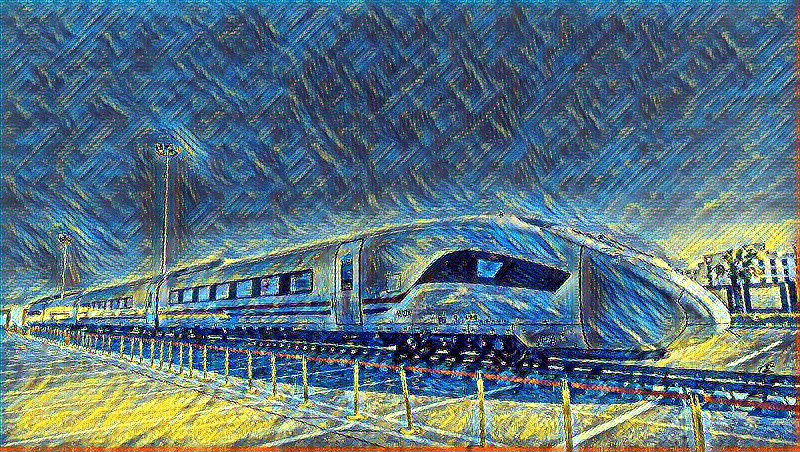
The African Union is advancing a 50-year masterplan for a transcontinental high-speed rail network, but must overcome the legacy of varied track gauges to enable seamless cross-border connectivity.
The Track Gauge Challenge
Africa's railway system is fragmented by colonial-era track gauges, creating interoperability issues:
- Cape gauge (1.065-1.067 meters): Dominates over 60% of lines in Southern and Central Africa.
- Meter/narrow gauge (0.95-1.0 meter): Present in parts of East and West Africa.
- Standard gauge (1.435 meters): Primarily in North Africa.
This diversity limits average speeds to 35-50 km/h and hampers electrification, with only a small percentage of lines powered.
AU's Vision and Masterplan
Under Agenda 2063, the African Union prioritizes rail development through the African Integrated High Speed Railway Network (AIHSRN). The 50-year plan identifies 13 priority corridors linking multiple countries, with eight links already operational or under construction.
Pilot Projects and Progress
Key initiatives include:
- The Tanzania-Rwanda-Uganda corridor, improving access for landlocked nations.
- The Ethiopia-Djibouti standard gauge line, built by Chinese contractors and financed by Chinese loans, operational since 2018.
- Ongoing projects like Kenya's Standard Gauge Railway expansions and Egypt's high-speed network development.
Standardization and Adaptation Strategies
The AU promotes standard gauge for high-speed segments connecting capitals and commercial hubs. For existing infrastructure, solutions involve:
- Dual gauge tracks (three or four rails) to accommodate multiple gauges.
- Interchange points with variable track gauge technology for seamless transitions.
- Selective upgrades rather than full replacement of narrow gauge lines.
Economic and Environmental Benefits
The network aims to:
- Reduce transport costs by up to 40%.
- Increase intra-African trade by 35%.
- Support decarbonization via electrification, aligning with net-zero emission targets by 2050.
Financing and Coordination Needs
Funding will require public-private partnerships, concessions, and government support. A pan-African agency is proposed to coordinate financing and implementation. With roads handling 70% of goods, rail expansion could alleviate congestion and boost Africa's global trade share from 2% to 12% by 2045.